
AI-generated illustration · Ecology · Science Forge
Our freshwater systems are in trouble, facing widespread degradation and a critical shortage of both freshwater and viable habitats [ for countless species. The urgency of this problem demands real, cost-effective solutions. Enter the beaver. These unassuming engineers offer a powerful answer through beaver-mediated restoration, a strategy gaining traction for its ability to rebuild degraded rivers and floodplains. This isn't just about saving ecosystems; it's about safeguarding the riverscape health that directly supports human communities downstream.
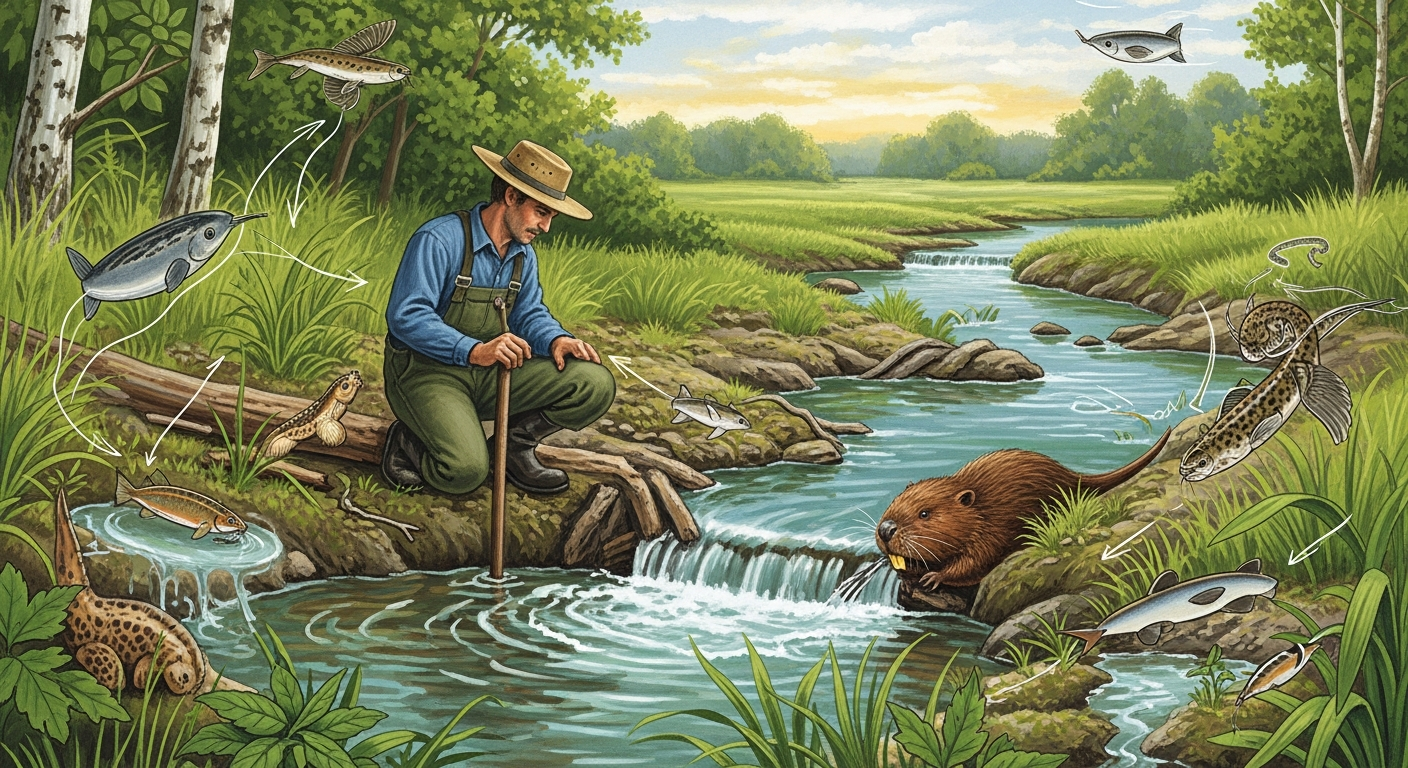
These natural architects transform barren channels into vibrant, complex waterways. Their dams create deeper and more variable stream habitats, carving out essential refuges for aquatic life. Crucially, they strengthen the connections between streams and their floodplains, allowing water to spread out, interact with the land, and recharge groundwater. This also means slower-moving water through affected stream segments, reducing erosion and allowing sediment to settle. The result is a significant improvement in overall riverscape health —a self-sustaining recovery engineered by nature.
The science confirms these impacts. Studies comparing stream segments with and without beaver dams in regions like the Great Basin of the Western United States show a clear pattern. Researchers measured ecosystem health indicators like stream depths, depth variability, stream-floodplain interactions, and water movement. The data consistently revealed deeper, more variable stream habitats, enhanced stream-floodplain connections, and significantly slower water in beaver-impacted areas.
However, our understanding of beaver-mediated restoration is still evolving. The benefits of beaver activity can vary depending on the specific valley setting and the status of the dam itself—whether actively maintained or abandoned. While some studies did not strongly observe direct increases in biodiversity indicators such as unique species counts or activity levels for fish, bats, or birds, the fundamental improvements in riverscape health are expected to foster diverse habitats that ultimately support broader biodiversity.
Understanding these variable conditions allows us to grasp what beaver-mediated restoration truly means for the future of our waterways. This means more resilient riverscapes capable of buffering against droughts and floods, providing consistent freshwater for both human use and wildlife. The natural engineering of beavers returns functional floodplains to our landscape, offering essential water storage and filtration that directly benefit communities. It is a powerful, living infrastructure.
As we continue to grasp the full extent and variability of beaver impacts, the path forward for river restoration becomes clearer. Ongoing research is critical to inform the feasibility, effectiveness, and benefits of beaver-mediated ecosystem health restoration across different regions. This deeper, more nuanced understanding will allow us to optimize the strategic application of these natural engineers, ensuring their work delivers maximum benefit where it's needed most.